Short answer: The Dian Fossey tomb hike is a half-day walk into Volcanoes National Park to the gravesite of the primatologist who changed the fate of the mountain gorillas. You need a permit — widely published at about US$75 per person for foreign visitors — sturdy boots for steep muddy forest, and a reasonable level of fitness. The walk takes one to three hours from the trailhead, and at the end you stand in the gorilla graveyard Fossey built, beside the grave of her and her favourite gorilla, Digit.
This guide covers what the hike involves, what you will see, how to book it honestly, and why the visit still matters for gorilla conservation today.
Who Dian Fossey was, in brief

Dian Fossey was an American primatologist who founded the Karisoke Research Center in Rwanda’s Virunga volcanoes on 24 September 1967. She spent nearly 20 years studying mountain gorilla groups daily, encouraged initially by palaeoanthropologist Louis Leakey. Her book Gorillas in the Mist, published in 1983, became the basis for the 1988 film of the same name. She was murdered at her cabin in the park in December 1985 and buried at Karisoke beside Digit, her favourite gorilla, who had been killed by poachers in 1977.
At the time Fossey began her work, the mountain gorilla population was falling. A census in 1981 counted only 242 individuals, down from an estimated 400–500 in 1960. By 2016 the Virunga population had recovered to 604 — the only great ape species to have increased in number in recent decades. Fossey did not live to see that recovery, but the daily monitoring model she created at Karisoke is a direct ancestor of the protection that made it possible.
What the hike is

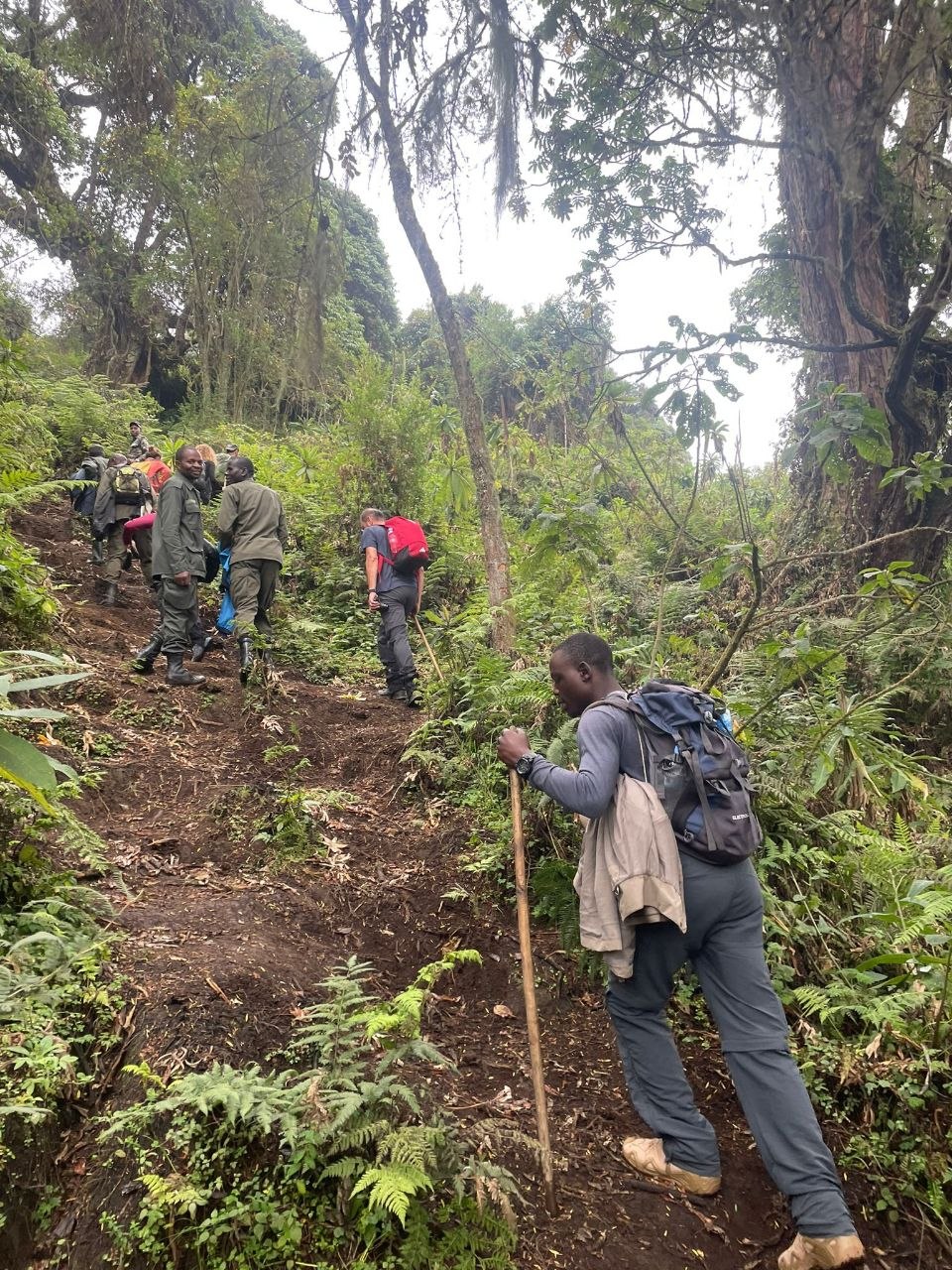
The Dian Fossey tomb hike is a guided forest walk to the old Karisoke camp site between Mount Karisimbi and Mount Bisoke — the name Karisoke is a blend of the two mountains. The trail climbs through Hagenia–Hypericum forest, often muddy and steep in places, with tree roots, nettles and exposed sections. It is not a technical climb, but it is genuinely physical, and rangers set a steady pace with regular stops.
A typical outing runs like this:
- Briefing at the Volcanoes National Park headquarters in Kinigi, where you are registered and assigned a ranger guide.
- 30-minute drive from the park headquarters to the trailhead near the park boundary.
- 10-minute walk from the trailhead to the park boundary.
- One to one-and-a-half hours of forest walking from the boundary to the Karisoke site, with views of the volcanoes and chances to see forest birds, golden monkeys, forest hogs and occasionally forest elephants.
- Time at the graves, then the return walk and drive back to Kinigi.
Most groups spend three to four hours total on the outing, including the drives. The old camp buildings are gone; what remains is the graveyard itself and the forest around it.
What you will see at the site
The Karisoke graveyard is a quiet clearing in the forest. Fossey is buried there alongside Digit and around 20 other mountain gorillas killed by poachers or who died of other causes during her years of study. The graves are simple, and the setting is deliberately unadorned — it reads as a place of work, not a monument.
The Dian Fossey Gorilla Fund moved its main operations to the Ellen DeGeneres Campus in 2022, so the old camp is no longer an active research base. What you visit is the burial site and the forest that surrounds it, not a working facility.
Permit, cost and booking
Every hiker needs a permit and a ranger guide. The widely published rate is about US$75 per person for foreign visitors, with lower rates for East African citizens and residents. Park tariffs in Rwanda are set and reviewed by the Rwanda Development Board and do change from time to time — treat any figure you read online, including this one, as indicative and confirm the current rate when you book.
The permit normally covers park entry and the ranger guide. It does not cover transport to the trailhead, porters, meals or accommodation. The minimum age is 15 years, and bookings are first-come, first-served, so reserve in advance rather than turning up on the day. Permits are usually arranged through a licensed operator or the park’s own reservation system.
What to pack and wear
- Waterproof hiking boots with good grip — the trail is muddy and slippery, especially in the rainy season.
- Long trousers, a warm mid-layer and a waterproof shell; the forest is cool and wet at altitude.
- At least 1.5 litres of water, a packed lunch and snacks.
- Sunscreen and sunglasses; the equatorial sun is strong even under cloud.
- A light daypack and a dry bag for electronics.
- Reusable bags only: Rwanda has banned non-biodegradable plastic bags for years.
When to go
The hike runs year-round. The drier months June to September and December to February tend to give firmer underfoot conditions and clearer volcano views, but rain is possible in any month at this altitude. Mornings are usually clearer; cloud often builds through the afternoon. The walk is short enough that most weather windows work.
How it fits into a Rwanda trip
The Dian Fossey hike pairs naturally with a gorilla trek in Volcanoes National Park — they use the same park headquarters and the same base in Musanze, so it is easy to do both in a two- or three-day stay. It also works as a lower-cost, lower-commitment alternative for travellers who want to walk in the gorilla forest without the US$1,500 gorilla permit. Many visitors combine it with our Rwanda gorilla trekking tour in Volcanoes National Park, the Mount Bisoke crater lake hike guide, or a day at the Twin Lakes.
Responsible-travel notes
Stay with your ranger and on the marked trail. Do not touch or move any grave markers or forest debris. Keep your voice low at the site — it is a burial ground, not a viewpoint platform. The permit fee and the park’s daily monitoring work are part of the same conservation model that Fossey pioneered, so the visit itself is a small direct contribution to the protection that keeps the mountain gorilla population growing.
Frequently asked questions
Can I visit the Karisoke Research Center itself?
The original camp site is what you visit on the hike. The Dian Fossey Gorilla Fund’s main research and visitor operations moved to the Ellen DeGeneres Campus in 2022; the old camp buildings are no longer in use.
Is the hike suitable for children?
The minimum age is 15 years. The trail is steep and muddy in places, so teenagers who are used to walking manage it well; younger children would struggle.
Will I see mountain gorillas on the hike?
Not reliably. The trail goes through gorilla habitat, and sightings are occasionally reported, but the hike is not a gorilla trek and no gorilla sighting is guaranteed. Book a dedicated gorilla trek if that is your goal.
How does this differ from the Mount Bisoke hike?
The Bisoke hike is a longer, higher climb to a crater lake at around 3,700 metres and costs a similar permit fee. The Dian Fossey hike is shorter, lower and focused on the conservation history rather than the summit view. Both start from the same park headquarters.
Plan your Dian Fossey hike with Gorilla Nest Expeditions
The Dian Fossey tomb hike is one of the most meaningful half-days you can spend in the Rwandan forest — a walk into the place where the long recovery of the mountain gorilla began. Gorilla Nest Expeditions can arrange the permit, guide and transport as part of a Volcanoes National Park itinerary.
Email info@Gorilla Nest Expeditionsexpeditions.com or message us on WhatsApp at +250 782 399 193 to build your days in the Virungas.
Related guides: Mountain Gorilla Conservation in Rwanda · Mount Bisoke Hike Guide · Complete Gorilla Trekking Guide
Sources and further reading
- Dian Fossey Gorilla Fund International — gorillafund.org
- Wikipedia contributors, “Karisoke Research Center”, Wikipedia — founded 24 September 1967, moved to Ellen DeGeneres Campus in 2022, population figures 242 (1981) and 604 (2016).
- Rwanda Development Board — rdb.rw (park tariff authority)
- Volcanoes National Park Rwanda — volcanoesparkrwanda.org
Facts in this guide are drawn from the sources above and are current to the best of our knowledge in October 2026. Park tariffs, permit fees and site access arrangements can change; confirm the latest details at the time of booking.